




If you’ve ever listened to a student carefully say each sound in a word, only to guess the word anyway, you already know the following information……decoding isn’t about exposure. It’s about structure.
Short vowel word chains are one of the best ways to help students move from knowing sounds to reading words accurately. When used intentionally, they help students slow down, attend to print, and make sense of how words work.
What Are Short Vowel Word Chains?
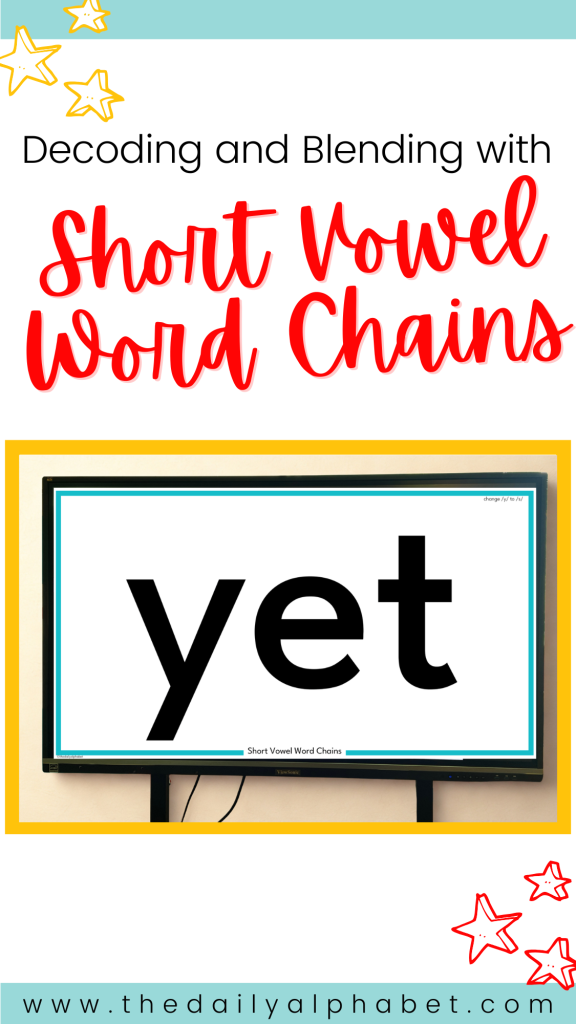
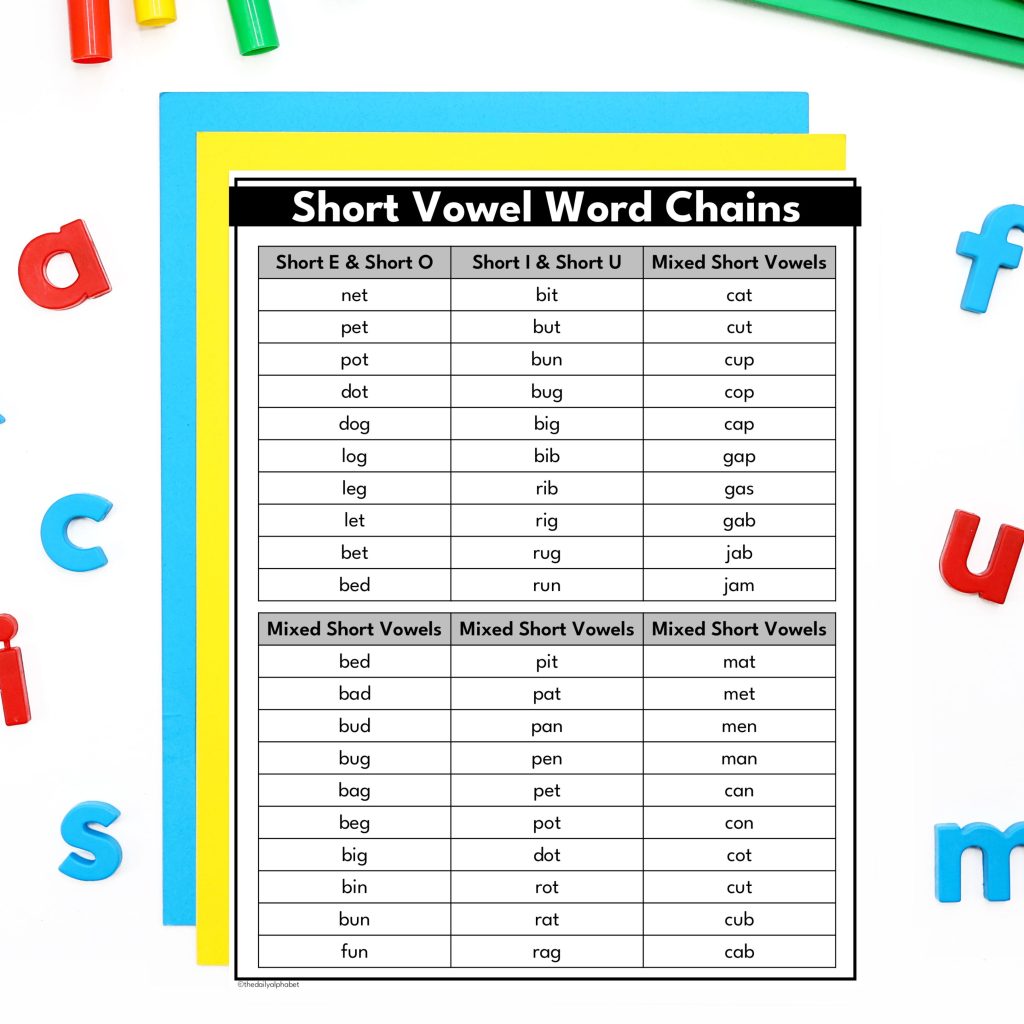
A short vowel word chain is a sequence of words in which only one sound changes at a time. For example, a student might read pat, then pad, then pan. Each word is closely connected to the one before it, with no random jumps or mixed skills. It’s designed so that, if you choose, the chain can end on the same word it began with.
This design allows students to focus on what actually matters when decoding, how sounds map to letters, and how small changes affect a word. Instead of memorizing or guessing, students learn to notice what changed and use that information to read the next word accurately.

Why Random Word Lists Don’t Work
A lot of students who struggle with decoding don’t just need more practice; the practice they’re given isn’t doing the right work.
Random word lists often overwhelm students with too many changes at once. When everything about the word changes, from sounds to letters and patterns, it becomes difficult for students to know what they should pay attention to. This can lead to guessing or memorization rather than real decoding.
Word chains help by controlling orthographic change. When only one sound changes, students can see and hear the difference. Errors become easier to catch, and students begin to understand how words are connected rather than seeing each word as brand new.
This type of practice supports orthographic mapping, helping students store letter–sound sequences in memory so words can be read more efficiently over time.
How Word Chains Align with the Science of Reading
Short-vowel word chains align closely with what we know about how students learn to read according to the science of reading.
They can integrate phonemic awareness and phonics instead of treating them as separate skills. They prioritize accuracy before speed, making sure students build a strong foundation before working toward fluency. They also strengthen the word recognition strand of Scarborough’s Reading Rope by helping students attend to every phoneme in a word and connect those sounds directly to print. We want the word recognition domain to become increasingly automatic.
Rather than practicing skills in isolation, students apply them during real reading tasks…..where the learning actually sticks.
Two Ways to Use Short Vowel Word Chains
One of the reasons word chains are so effective is their flexibility. Teachers can use them in different ways depending on student needs and instructional goals.
Option 1: Decoding Practice Only
- Students read each word in the chain.
- The teacher moves to the next word.
- Each word changes by only one sound.
This way works well when the goal is to build decoding accuracy and reduce guessing while keeping cognitive load low.
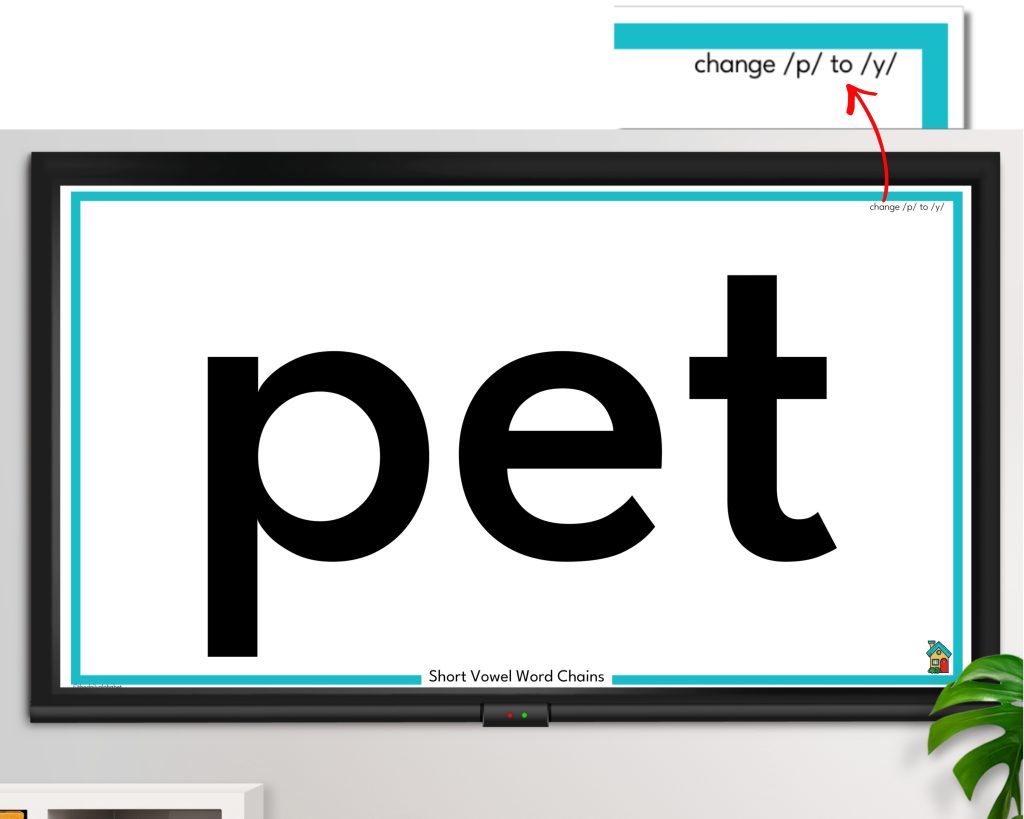
Option 2: Word Chains with Phonemic Awareness
- Students read the first word.
- The teacher tells them which sound to change.
- Students say the new word aloud.
- The next word is revealed and read to confirm.
This way adds a phonemic awareness layer by encouraging students to manipulate sounds orally before reading the word in print.
Teachers can move between these two options as students become more confident and automatic.
When to Use Word Chains (and When Not To)
Word chains are one of my favorite decoding routines….but they’re not meant for every moment of instruction.
Used at the right time, they can be great for students who can read words but don’t always read them accurately.
So how do you know when word chains are the right tool?
Word Chains Are a Great Fit When…
- Students guess instead of attending to every phoneme.
- They blend one word correctly, then fall apart on the next.
- They struggle when just one sound changes.
- They confuse vowel patterns.
Word chains slow decoding down just enough to make sound changes visible and meaningful.
Because each word changes by only one sound at a time, students stay anchored in the word instead of starting over or guessing.
Using Word Chains in Small Groups
Short-vowel word chains are especially useful during small-group instruction and intervention. In addition to using them digitally, teachers can also use printable word chain lists that allow students to write or build each word.
Writing the words or building them with letter tiles slows the routine down and makes decoding more concrete. Students can physically see which letter changes and connect that change to the phoneme they’re manipulating. For many students, this hands-on element is what helps decoding finally stick.
Word Chains Are Not a Curriculum
Short vowel word chains are not meant to replace phonics instruction. They are designed to reinforce it.
They can fit easily into existing literacy blocks, whether during whole-group phonics, small-group instruction, intervention, or as a daily decoding warm-up or spiral review. Teachers can focus on listening, observing, and making informed instructional decisions instead of handling materials or creating word lists.
If students are guessing, slow the chain down. If students are confident, move forward.
The power of short-vowel word chains isn’t in how many words students read…..it’s in the intentional progression from one word to the next. When students learn to see how words change one phoneme at a time, decoding stops feeling like a guessing game and starts making sense.
Want to Try Short Vowel Word Chains in Your Classroom?
If you’re looking for ready-to-use Short Vowel (CVC) Word Chains designed with intentional progression, flexible formats, and clear teacher support, you can check out the resource here!
SHORT VOWEL WORD CHAINS
Grab this easy-to-prep decoding routine that helps students read and blend CVC words accurately by changing one sound at a time.
Pin for later!