Let me paint a picture for you……
You ask a student to find the letter M. They pause, look slightly upward, and quietly mouth: a, b, c, d, e, f, g, h, i, j, k, l, m.
They find it. They move on. You move on.
But something important just happened, and it’s easy to miss.
That student didn’t retrieve the letter M. They navigated to it. The alphabet song or the alphabet posters hanging around the room were their search engine, and without them, they might not have found it at all.
If you teach kindergarten or first grade, you’ve probably seen this more times than you can remember. And you probably didn’t think much of it, because the student got the right answer. But that moment is worth paying attention to, because sung recall and actual letter knowledge are not the same skill.
What the Alphabet Song Actually Teaches And What It Doesn’t
The alphabet song can be a great beginning point. It gathers 26 letters into a catchy, singable mnemonic and sequence that most children can learn pretty quickly.
The problem is that the song teaches the alphabet as one long, unbroken chain. We’ve all had to listen to elemenop year after year! Letters don’t exist as individual, retrievable units, they exist as part of a sequence that has to be accessed from the beginning. Ask a child what letter comes after R, and many will start at A and work their way there.
That’s not letter knowledge. That’s sequence navigation.
True letter knowledge means a student can:
- Name a letter immediately when it is shown out of sequence
- Identify what comes before or after a specific letter without singing back to the beginning
- Access the letter names automatically, without effort, without the song, without a pause to think
The gap between these things is easy to miss because students who depend on the song still arrive at the right answer. They just take a different route to get there.
Automaticity Matters
When a student sits down to decode a word, there’s a lot they have to do: recognizing each letter, retrieving its name and sound, blending those sounds together, and monitoring whether the result makes sense. That’s a lot for a young reader.
If letter recognition isn’t automatic, if a student has to pause to decide what a letter is or where it falls in the sequence, that pause has a cost. It slows the entire process down, and eats up the mental bandwidth that should be going toward the harder work of reading.
Automaticity is the goal. Not just knowing letters, but knowing them fast, without the song, without hesitation. Students who build that kind of fluency before phonics instruction speeds up have a real advantage. The students who don’t often hit a wall early on in decoding that looks like a phonics problem, but it is actually an alphabet problem.
Three Signs a Student Is Relying on Navigating to the Answer
Not sure whether this is showing up in your classroom? Here’s what to look for:
- The upward glance. Students often look up and to the side when they’re internally reciting something. If you see it consistently when students are asked to identify or find a letter, they’re likely running through the song or looking at the alphabet posters around the room.
- The slow response on timed tasks. On letter naming assessments like DIBELS, mClass, or AimsWeb, students who rely on this type of recall consistently score lower than their actual knowledge seems to point to, because retrieval takes longer when you have to find your way to the answer.
- Inconsistency. A student who knows a letter in one context but seems to forget it in another is often navigating to the letter rather than retrieving by name. Change the sequence, and they no longer “know” it.
None of these things mean a student is behind – they mean a student is ready for the next layer of practice.
Moving from Exposure to Application
Most alphabet activities give students more of what the song already gave them: exposure. Tracing letters, matching letters, coloring letters, reviewing letters. All of that builds familiarity. None of it builds retrieval so that a student reaches mastery.
Retrieval comes from practice that asks students to produce letter knowledge independently. To reach for it without a scaffold, without the alphabet posters, without singing the song. To use it in context, readers need to work with letters in ways that require thinking, not reciting.
That looks like:
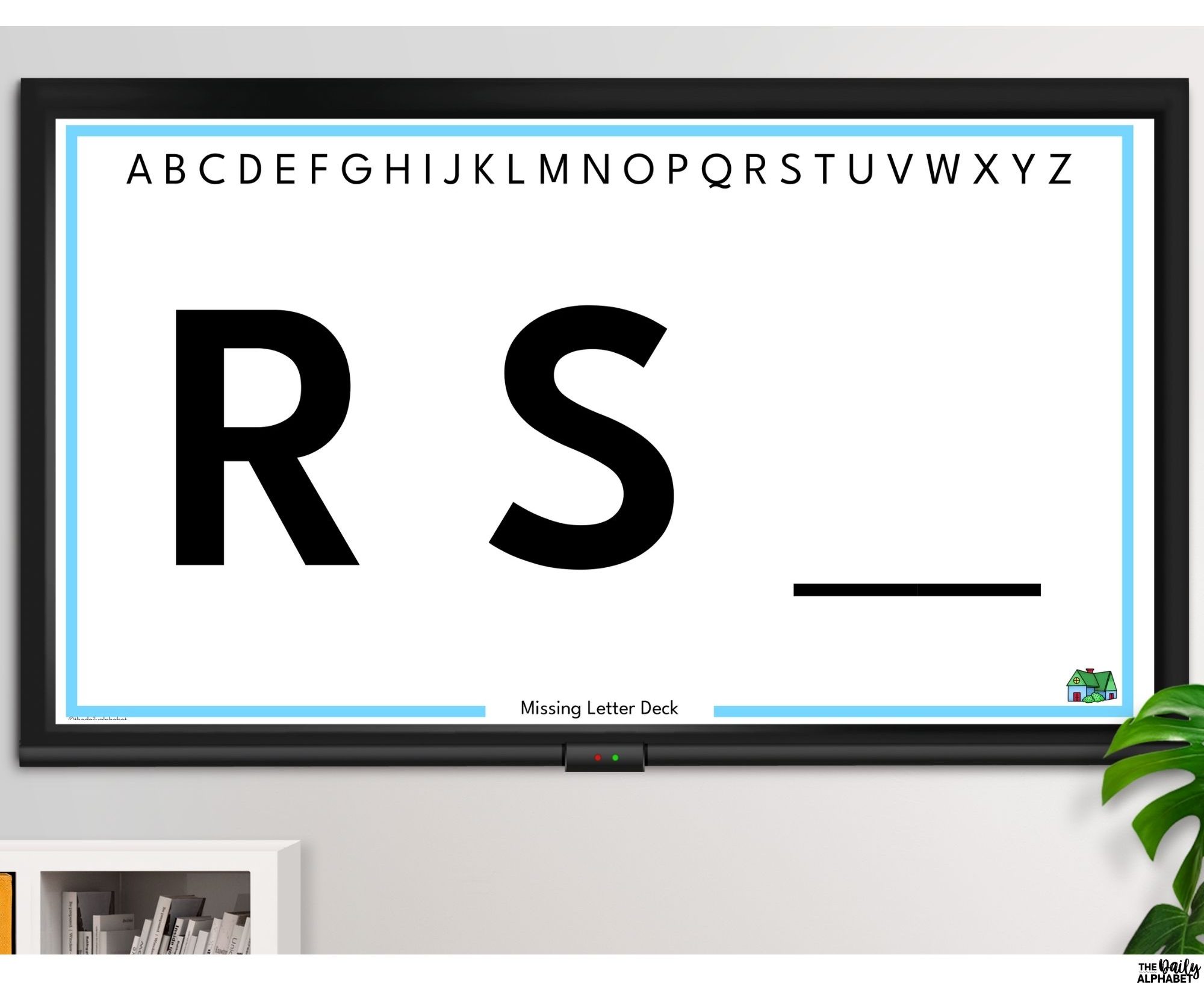
- Identifying a missing letter in a sequence
- Completing an alphabet pattern when letters before and after are given
- Working with letters out of order and out of context
These kinds of activities are harder than tracing. That’s the point. The challenge is what builds the automaticity.
One thing worth noting: when students are just beginning this kind of work, scaffolds are helpful. An alphabet strip at the top of the activity gives students a reference they can look at without being told to sing, and as their retrieval becomes more automatic, the scaffold can be removed.
A Classroom Tool Built for This
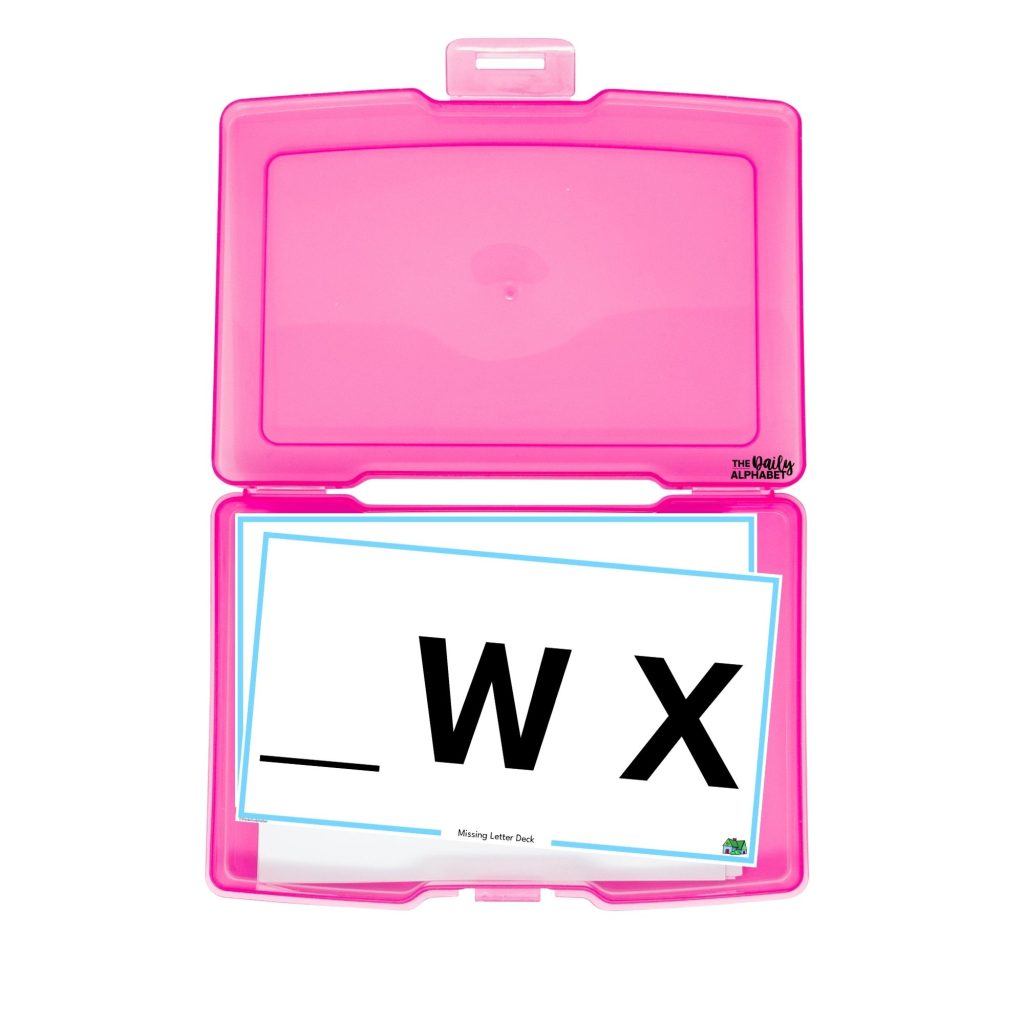
The Missing Letter Deck is a card-based alphabet activity designed around exactly this kind of practice. Students identify missing letters and complete alphabet sequences. There is no tracing, no matching, just active retrieval.
It includes five scaffolded levels, from final letter missing (the easiest starting point) all the way to a mixed format that keeps students working across all letter positions. Every level comes in two versions: one with an alphabet strip for students who need support, and one without for students who are ready to work independently (as well as capital and lowercase).
You also have the option to print it out for a physical deck that can be used during small group, intervention sessions, tutoring, or dyslexia therapy.
Many alphabet activities focus on exposure. This one focuses on application.
It works for whole group, small group, centers, intervention, and RTI/MTSS support, and there’s no prep involved.
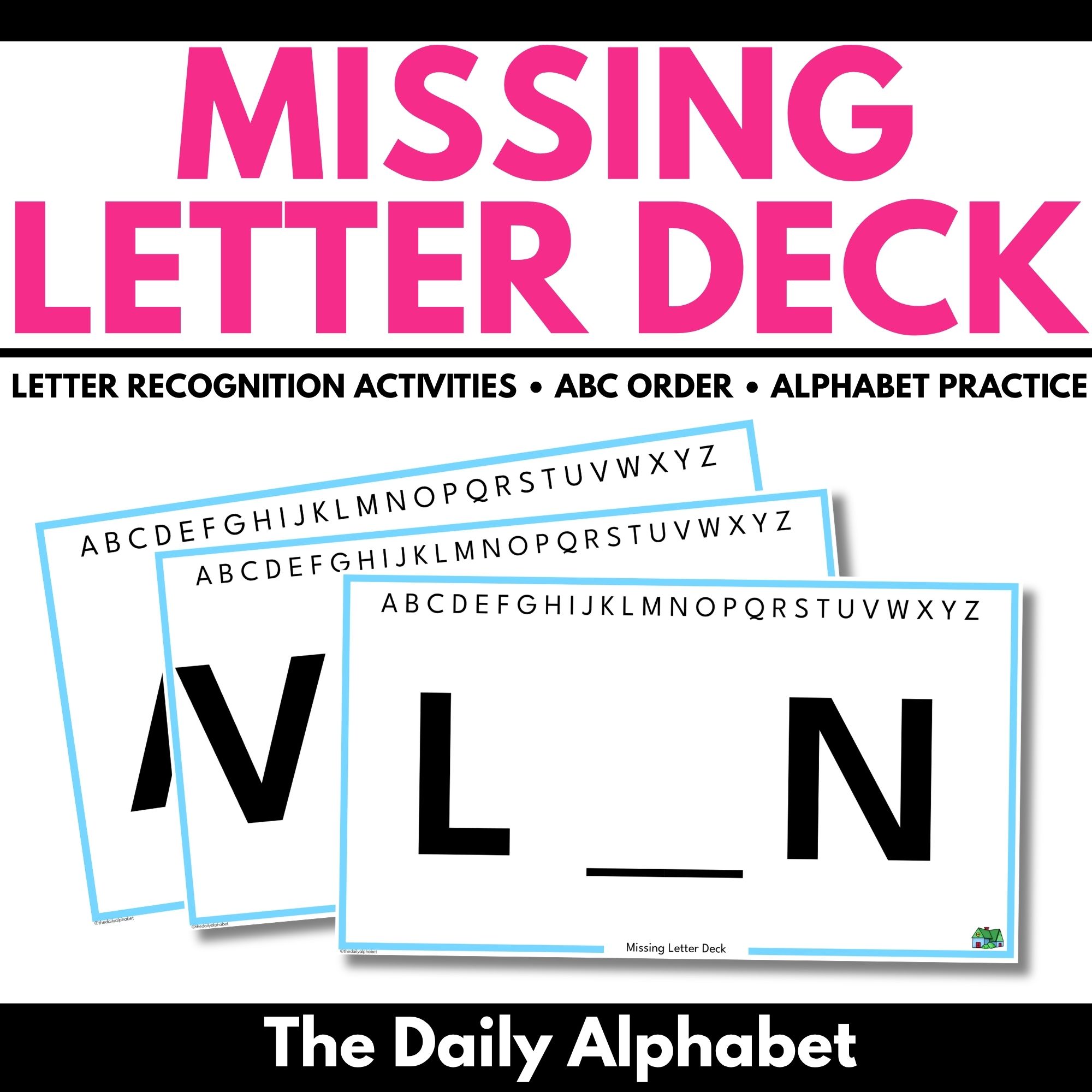
MISSING LETTER DECK
Move students from alphabet memorization to alphabet mastery with targeted missing letter practice designed to meet every student where they are.
When to Introduce This in Your Instruction
A few things need to happen before you can begin using the Missing Letter Deck. First, all lowercase letters should be introduced. Next, students need to be able to complete the alphabet arc with all letters in the correct sequence within 3 or so minutes.
Try This This Week
Here’s a simple experiment you can run tomorrow: ask a student to tell you what letter comes after R. Without singing the alphabet or looking around the room at the alphabet posters. Or ask them to write the letter that comes before P. Notice what happens. Do they retrieve it immediately, or do you see the pause?
That pause tells you something. And once you know what to look for, you’ll start seeing it everywhere.
And if you’re ready to add more retrieval-focused alphabet practice to your routine, the Missing Letter Deck is a great place to start.