You give the alphabet assessment. The student scores 90% or better. On paper, they know their letters.
Then you think back to what actually happened during the test. The hesitations. The eyes drifting up and to the right while they search for the letter, the sound, the name. And you realize the accuracy score never told you the whole story. It just isn’t automatic yet.
That gap between knowing it and knowing it instantly is the one that can follow kids from kindergarten into first and second grade, and it’s bigger than most letter assessments are built to catch.
Alphabet Knowledge: What Is It?
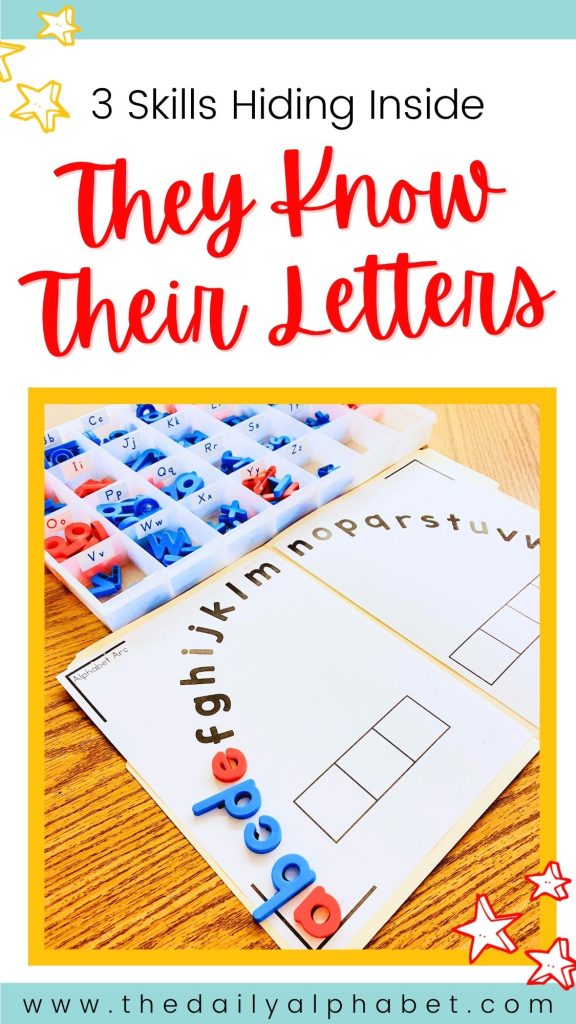
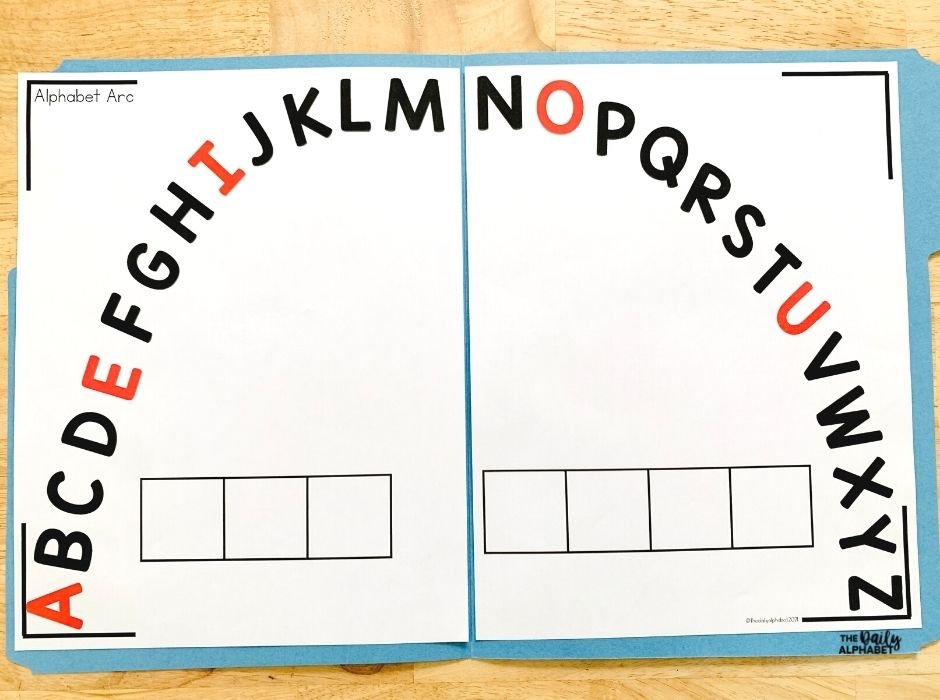
Alphabet knowledge is where all of this starts, and it’s easy to treat it as one single skill. It isn’t. The alphabet arc is the tool we use to build it, and today we’re breaking it down into the three skills it includes and taking a closer look.
Alphabet knowledge is a student’s ability to identify and name the letters of the alphabet. Somehow, letter sounds get included in alphabet knowledge, and although letter names and letter sounds are closely intertwined, they are separate skills. This post will just discuss letter recognition, letter naming, and letter sequencing.
Letter Recognition: Can they find it when they see it?
This is the piece most alphabet assessments actually measure. Show a student a letter, ask them to point to it or match it. It’s the easiest skill to test, which is exactly why it’s the one that gets mistaken for the whole picture.
If your alphabet assessment stops here, you can walk away thinking “my kids know their letters”. What you’ve really assessed is that they can recognize letters with support in front of them. Recognition is real progress. It’s just not the finish line.
Letter Naming: Can they retrieve it on demand?
Naming is a different job for the brain. It’s not “do you recognize this when you see it,” it’s “can you pull the name or sound up from memory, cold, no letter in front of you to lean on.”
This is usually where the gap shows up, and first grade is often when it shows up loudest, when it’s time to blend. Teachers move into blending expecting kids who “know their letters” to be ready, and instead they watch students stall out retrieving the very sounds they need to blend. Fast naming doesn’t automatically mean students are ready to decode. It means the letter-sound connection is there. Whether it’s automatic enough to use in real time while reading is a separate question.
Letter Sequencing: Do they know where it lives?
Sequencing is the quietest of the three, and the one most likely to go unnoticed the longest. Can a student tell you what comes before or after a given letter? Do they know where it falls in the alphabet well enough to use that positionally, not just recite the song front to back? Or do they tend to navigate to the right letter?
This is the piece that tends to surface as a gap in second grade, once kids are expected to alphabetize, use reference tools, or move through letters with speed and flexibility. By then it’s easy to assume a sequencing stumble is something else entirely, because “they know their ABCs” was settled two years ago.
Automaticity is the actual goal
Recognition, naming, and sequencing aren’t three separate units to check off. They’re three parts of the same skill, and decoding depends on all three being automatic, not just present. A student can have all three “know it” boxes checked and still hesitate their way through blending, because knowing and retrieving instantly are not the same thing.
That’s the gap the Alphabet Arc is built to close, moving kids from “I can find it if you point me toward it” to “I know it without thinking about it.” Once that automaticity is in place, there’s a next step waiting on the other side, and we’ll get there soon.
For now, grab the updated Alphabet Arc below and see exactly where your students are hesitating. If you already have an Alphabet Arc, go ahead and download it anyway to grab the instructional pages.
BUILDING AUTOMATICITY WITH THE ALPHABET ARC
This activity will help your students to build letter recognition, letter naming, and letter sequencing with capital and lowercase letters.
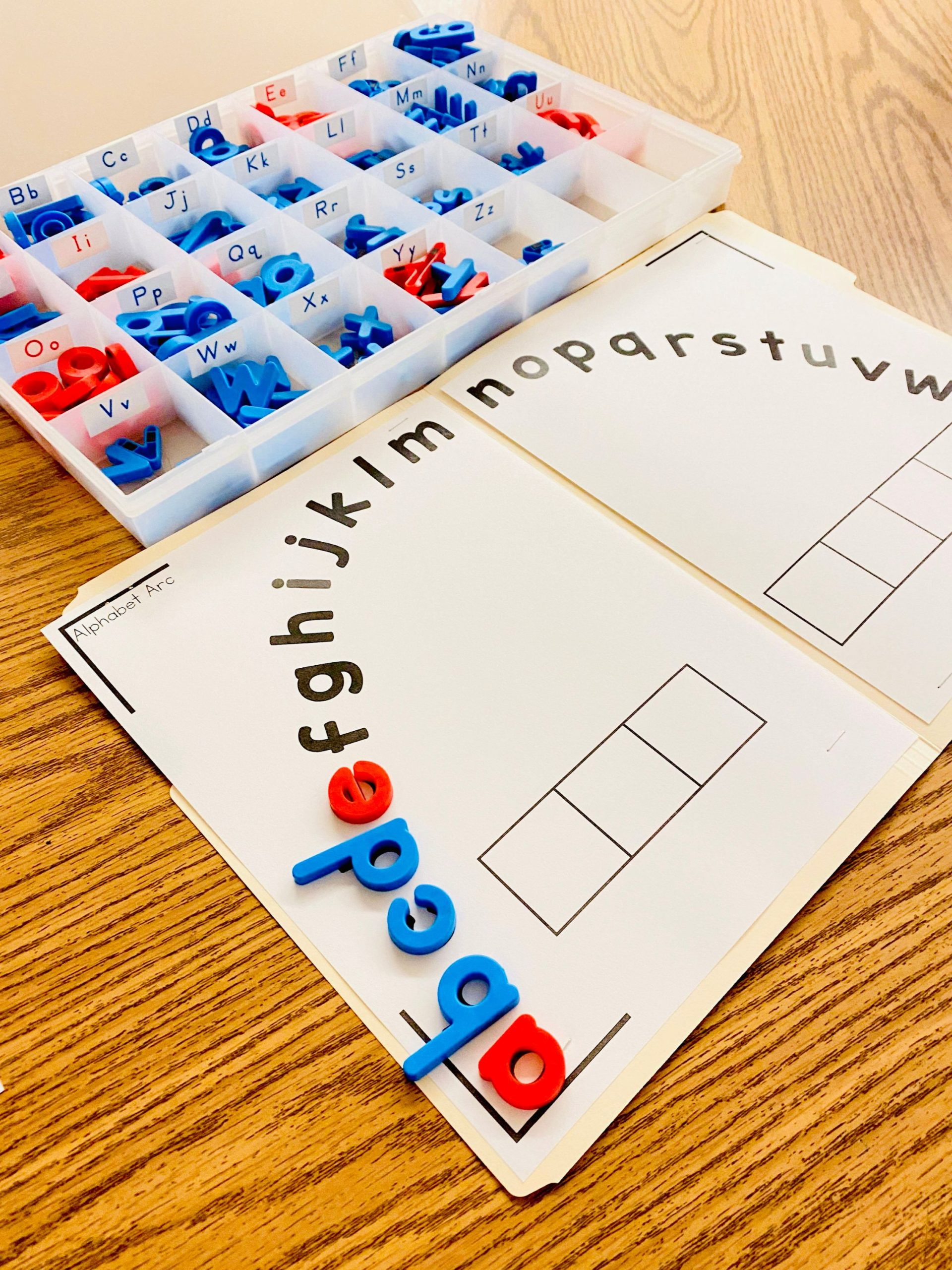
Once you’ve run it with a few students, you’ll start to see exactly where the hesitation lives… recognition, naming, or sequencing. And once you know that, you know exactly what to build next.
Pin for later!