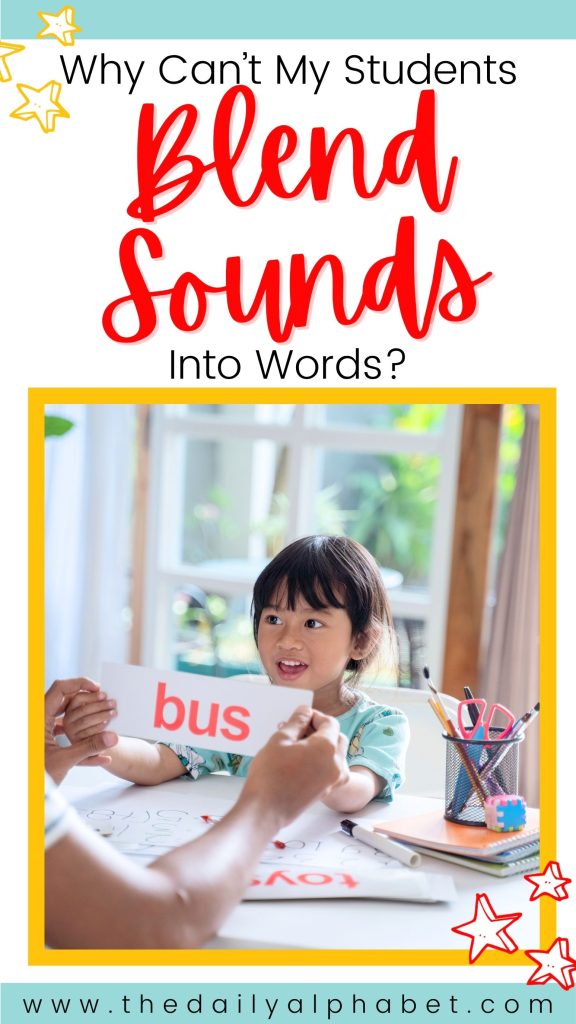
Why can’t my students blend sounds into words? This was a question that I asked myself very often. You see, I had a student stuck in what I call the Blending Black Hole.
Every. Single. Word. Took. An. Eternity.
C… a… t… She’d look at me, eyes pleading, “Can I just say dog?” Nope.
I’m guessing it was dog, because if it wasn’t cat or sun, it was always dog.
The problem wasn’t sound knowledge. She knew her sounds cold. So why couldn’t she blend those sounds into words? It was like watching a car try to drive with the parking brake on. Lots of noise, no actual movement. And when she finally did decode a word, she’d forget it two seconds later, because getting it out had taken every ounce of mental energy she had.
That’s when I stopped reaching for another word list and started looking at what was actually broken.
This post contains affiliate links. You can take a peek at my disclosure here.
Segmenting vs. Blending: Why Students Know Their Sounds But Can’t Read Words
Here’s the mix-up I see constantly, and the one I made myself for longer than I want to admit: when a student can’t decode, the instinct is to go back and drill sounds again. More phoneme isolation, more “what sound does this make,” more flashcards.
But segmenting and blending require different things when it comes to the brain’s workload. Segmenting asks a student to pull a word apart. Blending asks them to hold three or four sounds in working memory, in order, and fuse them into something meaningful, in real time, without dropping the first sound before they reach the last one. That’s a heavier lift.
This is where Scarborough’s Reading Rope shows its logic: phonological awareness and alphabet knowledge are separate strands, but the word recognition domain only becomes automatic as these skills progressively interweave together.
My student had the strands. They just weren’t interwoven yet. And no amount of extra sound drilling was going to build it for her, because sound drilling wasn’t the missing piece.
Why Can’t My Students Blend Sounds Into Words? The Fix Isn’t More Drilling.
What actually got her out of the black hole wasn’t more isolated sound work. It was the right kind of practice. It was structured, repeated practice at the specific skill of stringing sounds together, starting small and building steadily.
Not worksheets where she circles the right word from four choices. Not flashcards. An actual blending routine, sound by sound, with enough repetition that it stopped being effortful and started being automatic.
This is the step a lot of classroom materials quietly skip. They teach segmenting hard (clap it, tap it, box it) and then jump straight to independent decodables, assuming blending will just happen somewhere in the gap.
For a lot of kids, it does. For your black hole kid, it doesn’t. And that gap is where a lot of “struggling readers” get created who aren’t actually struggling with phonics knowledge at all. They’re struggling with one specific, teachable, closeable skill.
What a Real Blending Progression Looks Like
The routine that pulled my student out followed the same shape I now use with every kid who hits this wall:
- Start at the phoneme level. Targeted sound review before anything harder.
- Blend two phonemes before three. Easing in, not diving into the deep end.
- Build to three-phoneme CVC words once two-phoneme blending is solid.
- Move into short decodable phrases for connected meaning.
- Finish with full lines of connected text for fluency and comprehension.
Skip a step in that order, and you’re asking a kid to do two hard things at once, which is exactly what was happening before we backed up and slowed down.
Differentiating Without Rebuilding Your Lesson Plans Every Week
Here’s the part that saved my sanity…I wasn’t hand-building three versions of this practice every week for my beginning, middle, and advanced blenders.
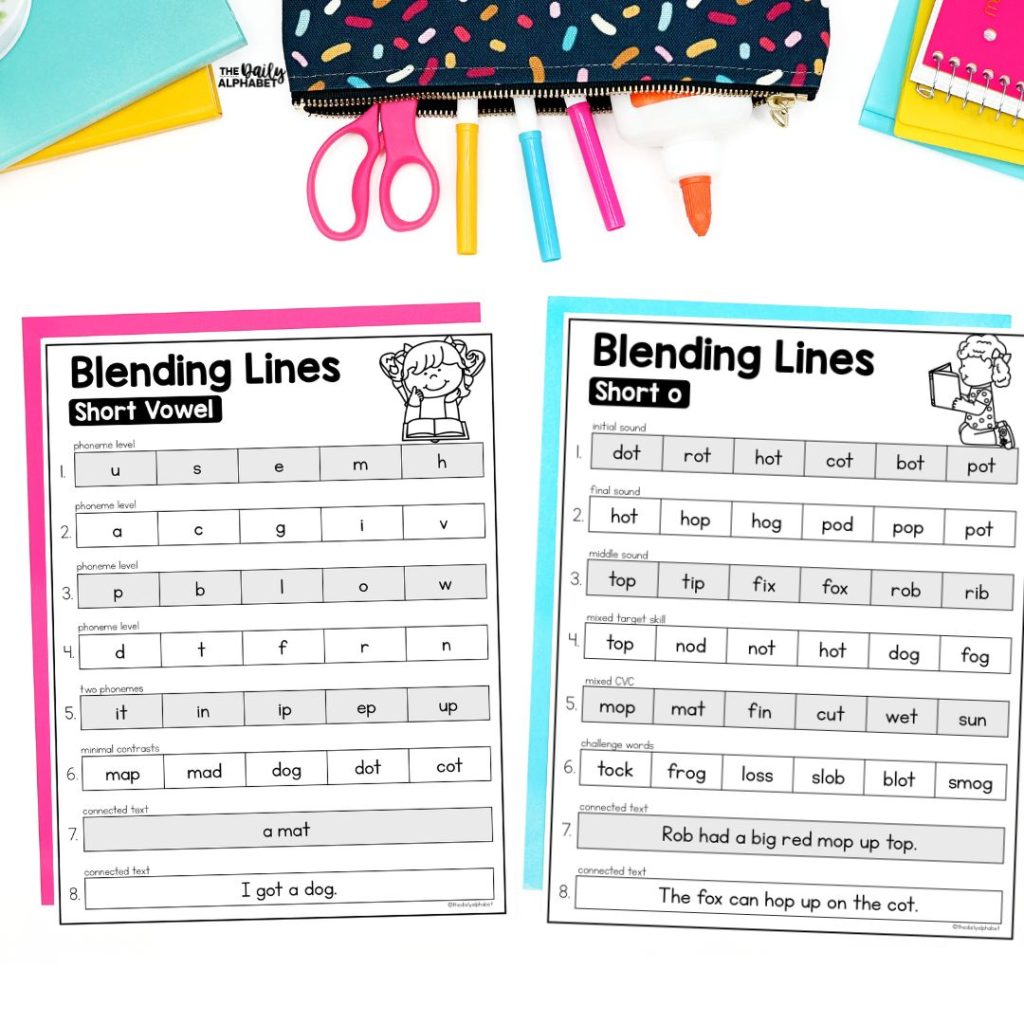
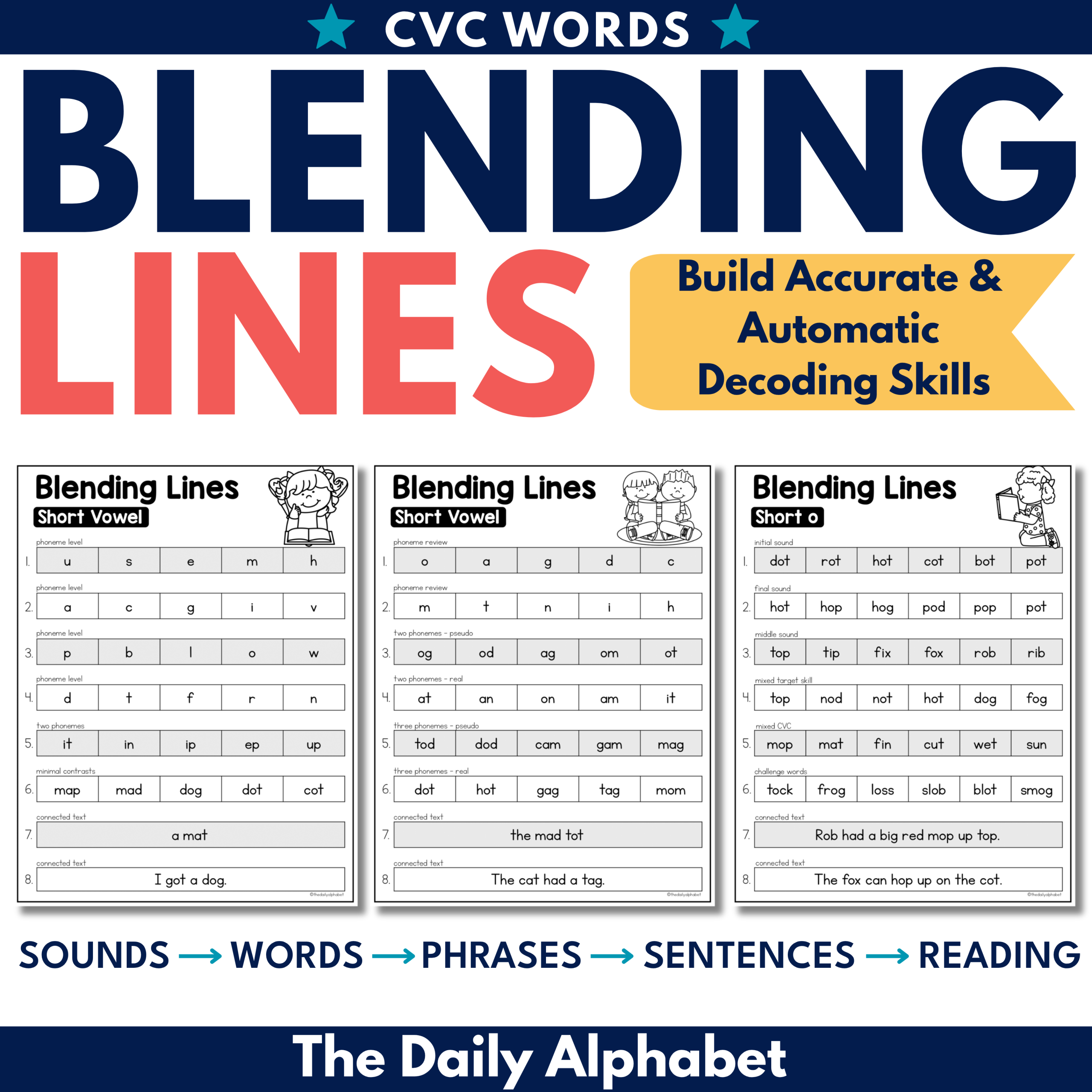
I started using Short Vowel Blending Lines, a set built around this exact progression, three tiers already scaffolded from phoneme review through connected text. This is based on the research of my favorite phonics guru, Wiley Blevins. He discusses this more in his books A Fresh Look at Phonics, and Differentiating Phonics Instruction for Maximum Impact.
My student started in the beginning set, working line by line through phoneme review, into two-phoneme blends, into CVC blending practice with minimal contrasts. Print-and-go, no guessing about what came next, because the scaffold was already built in.
Because it’s systematic and predictable, students build confidence and momentum instead of frustration and fatigue. It also makes sure that readers are attending to every phoneme, and allows you to catch guessing in the moment.
That same student? She’s not stalling out anymore. She’s blending, decoding, and actually retaining what she reads, because it’s finally clicking instead of draining her.
Have you got a Blending Black Hole kid in your room right now?
If you do, the Short Vowel Blending Lines set can be the bridge, with three built-in levels so you’re not stuck creating separate materials for every kid at a different stage. Grab it here.
SHORT VOWEL BLENDING LINES
Move students from guessing sounds to reading words with scaffolded blending practice designed to meet every reader where they are.
Pin for Later!