





It’s the fourth week of school, and you’re still wondering when to start teaching blending. Not because you don’t want to start, but because half your class can’t reliably name all 26 letters yet, and somewhere along the way you picked up the idea that decoding waits until the alphabet is locked down. So the real question we need to ask isn’t how many letters a student needs first; it’s when blending should actually begin.
Spoiler alert: waiting for all 26 might be costing your class time they can’t afford to lose.
Where Alphabet Knowledge Fits Into Decoding
Scarborough’s Reading Rope names the strands that weave into skilled word recognition: phonological awareness, decoding, and sight recognition. Alphabet knowledge isn’t one of those strands, but it’s one of the entry points into decoding itself. You can’t blend or decode letters you can’t yet identify, so alphabet knowledge before phonics functions as the on-ramp, a piece that has to get moving before decoding can take off, not a strand that has to fully finish first.
Linnea Ehri’s phases of word reading development backs this up from a different angle. Kids move from the pre-alphabetic phase into partial alphabetic reading long before they have full letter mastery. Partial alphabetic readers use the letters they do know, usually the first and last sounds in a word, to start making sense of print. That’s not a workaround. That’s the expected next step. A student with partial letter knowledge isn’t behind schedule. They’re exactly where the research says a beginning decoder should be.
When to Start Teaching Blending
Here’s the part that trips teachers up: blending exposure shouldn’t wait for a specific letter count at all. As soon as a student knows a handful of consonants and vowels, even just three or four, they should already be getting exposed to blending. That’s the actual research-backed starting point, not a threshold to hit before you begin, but a green light to start introducing blending as soon as there’s anything to blend.
What changes as letter knowledge grows is where your instructional focus sits. Below around 15 or so letters, letter recognition still needs to be the explicit, primary focus of instruction, with blending happening alongside it as exposure, not as the main event yet. Once a student crosses that 15-letter mark, the balance can shift. Blending can take a bigger share of instructional time because there’s now enough of a letter base to make that practice productive rather than a guessing game.
This changes what the first weeks of phonics instruction can look like. Instead of a blanket “we’re not ready yet,” you can expose every student to blending early, while keeping letter recognition as the main focus for students still building their letter base, and shifting more weight onto blending practice once a student has enough letters to work with. Nobody is sitting out. Nobody is waiting on a number before blending ever enters the picture.
Picture a student who’s known just four or five letters since the start of the year. She’s already had some exposure to blending, even if it’s mostly modeled for her so far. By the time she crosses into that 15+ range, the shift is less about starting something new and more about her taking on more of the blending herself, /s/ /a/ /t/ becoming sat with less support each week. That gradual handoff is doing real instructional work. It’s showing her that letters are tools she’s already learning to use, not a wall she’s still climbing.
Finding Where a Student Sits
So how do you actually find where a student sits on that continuum? It comes down to two checks.
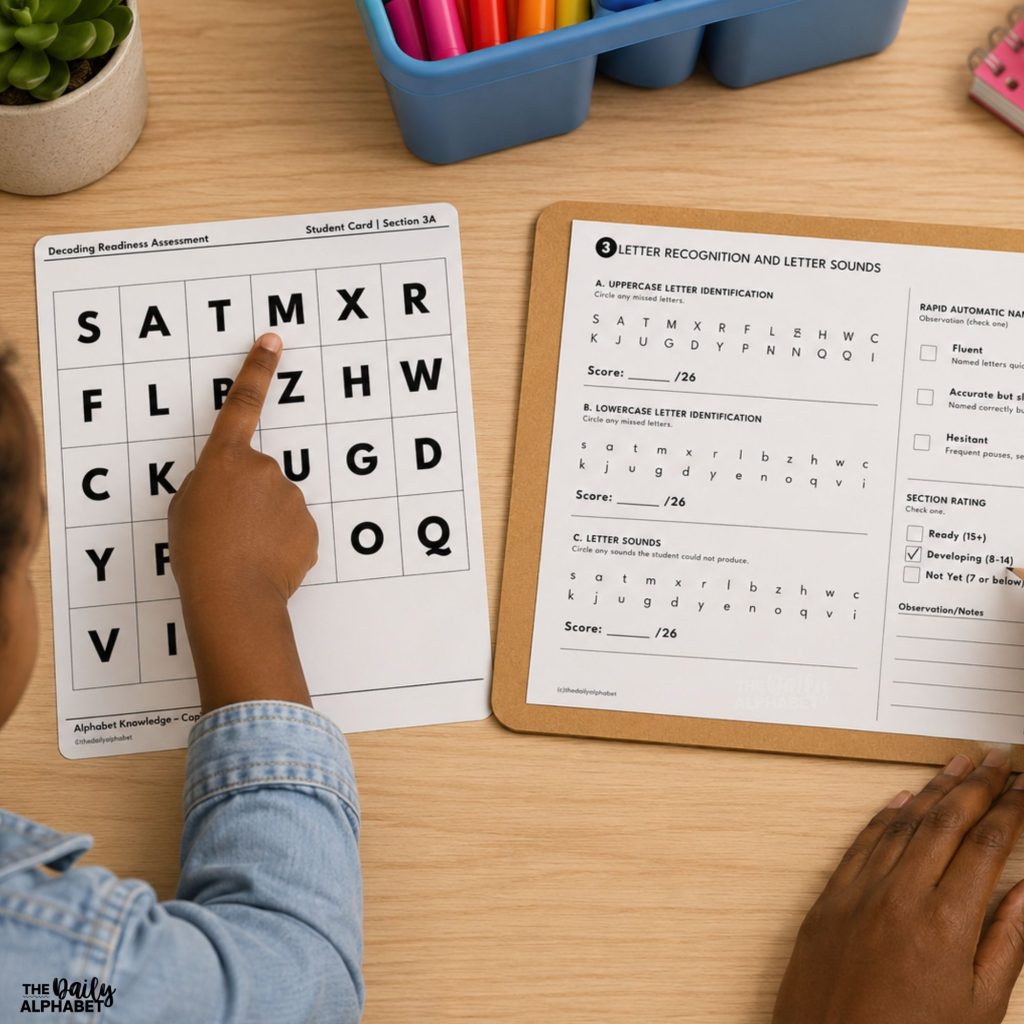
First, get a real letter count. Not a gut sense of “she knows most of her letters,” an actual number. Sit down 1:1 and have the student identify letters, uppercase and lowercase, and produce the sounds for as many as they can. Tally what they get right. That number is what tells you whether letter recognition still needs to be the main event or whether it’s time to shift weight toward blending.
Second, apply the dividing line. If the count lands below 15, letter recognition stays the primary instructional focus; blending is still happening, but with more exposure and modeling in addition to practice. If the count is 15 or above, flip the ratio: blending can take on a bigger share of instructional time because there’s now enough of a letter base to make that practice productive instead of a guessing game.
That’s genuinely it. You don’t need a formal tool to do this for one student. Grab an alphabet chart, sit down for a few minutes, count, and act on what you find.
Where it gets harder is doing that same 1:1 check, accurately and consistently, for every student in your class, more than once a year, on top of everything else the school year asks of you.
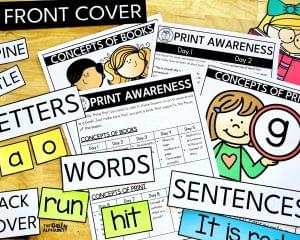
That’s the exact gap the Decoding Readiness Check was built to close. It’s a 5-10 minute, 1:1 screener for decoding readiness in kindergarten (and first grade) that walks through print awareness, phonological awareness, alphabet knowledge, and speech-to-print in one sitting, so you can see where to focus.
DECODING READINESS CHECK
A 1:1 diagnostic reading assessment that helps K-1 teachers determine decoding readiness.
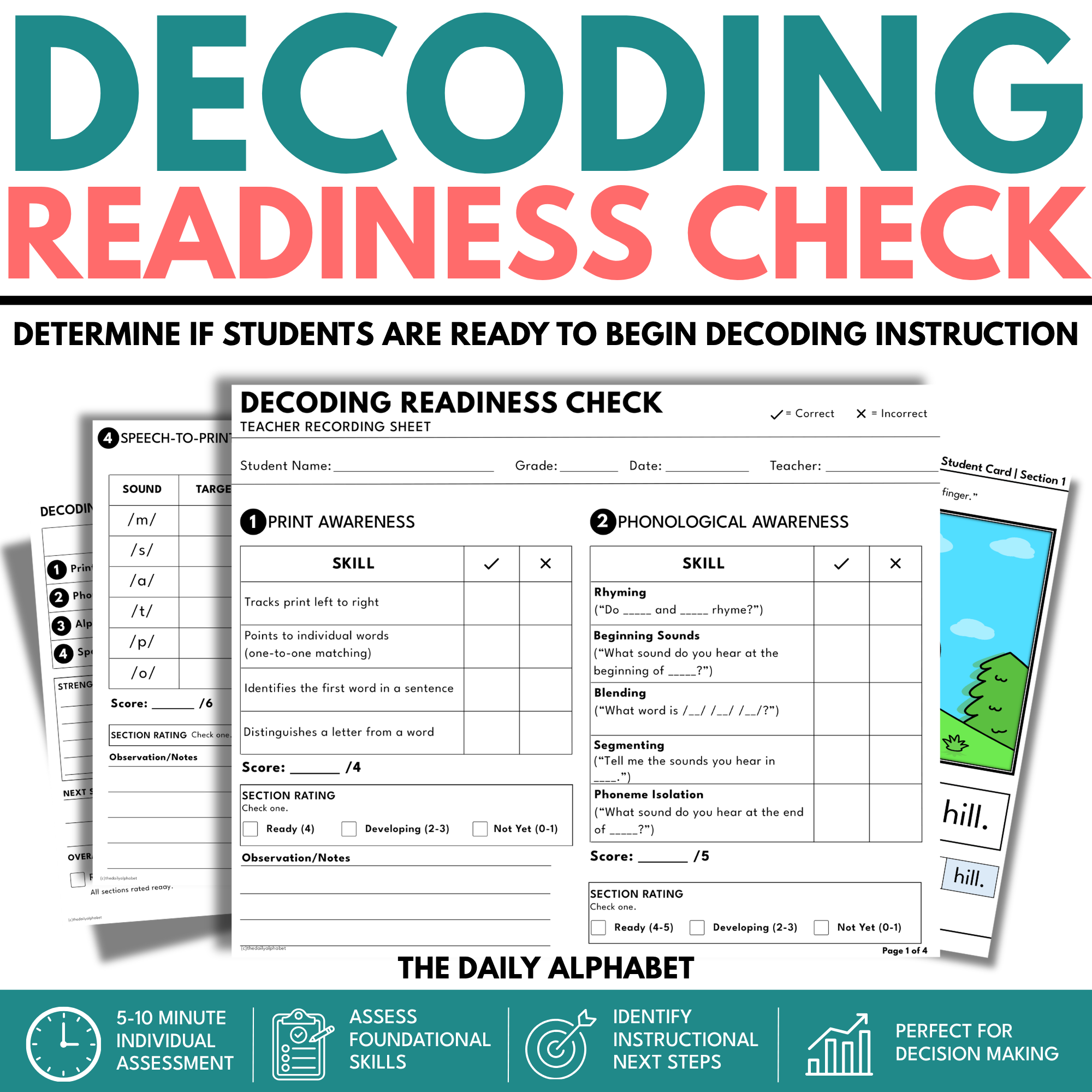
The recording sheet rolls everything into one Overall Readiness Determination, Ready to Decode, Nearly Ready, or Continue Foundational Instruction, so you’re not left interpreting four separate scores by hand for twenty-plus kids.
Try It With One Student First
If you’re not sure where to start, pick one student you’ve been on the fence about, someone who “mostly” knows their letters but you haven’t quite trusted to start blending yet. Run the four sections. See where they land.
You might find they’re closer to ready than you thought.
If you want a clear answer instead of a gut check, the Decoding Readiness Check gives you a yes/no in one 5-10 minute sit-down, with a scoring system that does the interpreting for you.
Pin for later!